I. The Question of the Locked Door
Every genre carries within it the seed of its own obsolescence. The Gothic understood this earlier than most. By the mid-twentieth century, its most celebrated practitioners were already dismantling the machinery from the inside, stripping bolts from the haunted house even as they profited from its architecture. The decaying manor persisted. The locked room endured. But something had shifted in the walls. The best Gothic writers were no longer interested in what was behind the door. They were interested in why the protagonist needed the door to be locked in the first place.
This is the fracture line from which the Psycho-Gothic emerges. Not as a rejection of the Gothic tradition, but as the logical, perhaps inevitable, consequence of its most honest impulse: the suspicion, harboured by every serious Gothic novelist since the form began, that the ghost was never the point. That the real subject was always the mind that conjured it.
What follows is not a catalogue of influences. It is an argument about a single, slow-moving act of literary surgery that took over a century to complete, in which the Gothic tradition progressively cannibalised its own supernatural apparatus until there was nothing left but the clinical architecture of a mind in collapse. The Psycho-Gothic is the form that remains when that surgery is finished. Its distinction lies not in any single innovation, but in the refusal to leave a single door open through which the reader might escape into the comfort of the impossible.
II. The First Incision
The operation began in 1892, and it began with a physician’s prescription.
Charlotte Perkins Gilman
Charlotte Perkins Gilman did not set out to found a literary movement. She set out to indict a medical system, and in doing so she performed the first clean severance between Gothic dread and supernatural causation. The Yellow Wallpaper takes the madwoman in the attic, a figure who had served as Gothic décor for decades, and asks a question that none of her predecessors had been willing to confront directly: what if the madness is not a metaphor? What if it is a diagnosis?
The answer restructures the entire genre. Gilman’s protagonist hallucinates a woman trapped behind the wallpaper’s pattern, and the text offers no spectral explanation, no ancestral curse, no demonic influence. The hallucination is the terminal product of enforced sensory deprivation, compounded by postpartum psychosis, administered by a husband whose authority is itself the instrument of confinement. The ghost is a symptom. The haunted house is a treatment plan.
What makes this more than a case study dressed in fiction is Gilman’s instinct for formal restriction. She locks the narrative inside her protagonist’s deteriorating perspective and never grants the reader a corrective vantage point. We watch the wallpaper shift and crawl because we are trapped in the room alongside a mind that is being systematically starved of everything it needs to function. The prose does not romanticise the descent. It records it with the cold precision of a ward log, and the coldness is the horror. There is nothing in The Yellow Wallpaper that a clinician could not explain. That is precisely why it remains, over a century later, more frightening than any ghost story in the English language.
Gilman proved that Gothic dread survives the removal of the supernatural. She did not, however, address the question of what should replace it at the level of narrative structure. She opened the patient. The question of what to do with the interior would occupy the next century.
III. The Refusal of the Answer
Henry James understood something about narrative architecture that most horror writers have still failed to grasp: resolution is a form of anaesthesia. The moment a story explains itself, the dread dies. Not because the explanation is insufficient, but because the act of explaining implies that the horror is bounded, classifiable, and therefore survivable.
Henry James
The Turn of the Screw is frequently discussed as an exercise in ambiguity, and it is, but that framing understates the severity of what James actually built. He did not simply leave a question unanswered. He engineered a narrative in which the answer is structurally impossible to reach. The governess at Bly records the physical world with obsessive, granular accuracy. The rooms, the grounds, the children’s behaviour: the sensory data is precise. But the interpretive framework through which she processes that data is catastrophically compromised, shaped by repressions she cannot name and desires she will not acknowledge. The reader receives a perfectly calibrated instrument pointed at the world, and then discovers that the instrument is broken in a way that makes every reading it produces simultaneously plausible and unreliable.
This is not ambiguity as a parlour trick. It is ambiguity as a clinical condition. James demonstrated that when a narrative is genuinely confined to a fractured perspective, the text itself inherits the fracture. The story cannot offer objective clarity because the consciousness generating it cannot access objective clarity. The ambiguity is terminal. It does not resolve because it cannot resolve, and the discomfort the reader experiences upon closing the book is not the discomfort of an unsolved mystery but the discomfort of having been locked, however briefly, inside a mind that has lost the capacity to distinguish its own projections from the external world.
James left one load-bearing wall intact. He refused to decide. The ghosts at Bly might be real. The governess might be delusional. He held the two possibilities in suspension and let the reader choose, and that choice, however agonising, is still a form of comfort. The Psycho-Gothic would eventually remove it.
IV. The Architecture Turns Inward
Shirley Jackson completed the next phase of the operation, and she did it by recognising something that neither Gilman nor James had fully articulated: the Gothic’s dependence on physical architecture was itself a crutch. The decaying manor, the barred nursery, the isolated estate: these spaces generated claustrophobia, but they also provided geography. They gave the horror a location, and a location can be left.
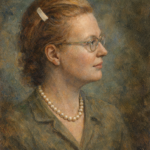
Shirley Jackson
Jackson’s genius was to understand that the most effective prison is not a room but a perspective. In The Haunting of Hill House, the architecture of the estate is secondary to the architecture of Eleanor Vance’s consciousness. Hill House does not haunt at random. It finds the precise fissures in Eleanor’s psyche, her isolation, her guilt, her desperate need to belong, and applies pressure with surgical specificity. The reader is never certain whether the house is malevolent or whether Eleanor’s mind is simply interpreting a cold, indifferent building through the lens of her own pathology. Jackson holds both readings available, and the oscillation between them is the engine of the dread.
But it is in We Have Always Lived in the Castle that Jackson’s structural contribution becomes fully visible. The Blackwood sisters wall themselves inside their family home, and there is no supernatural presence whatsoever. The haunting is constructed entirely from coping mechanisms: the rituals, the refusals, the shared architecture of denial that two traumatised people build to survive a reality they cannot face. The house ceases to be a location and becomes a cage assembled from the characters’ own psychological material.
Jackson proved that the setting of a Gothic narrative can be entirely subjugated by the mind moving through it. The physical space becomes a projection, a mirror, a cage whose bars are shaped by the specific contours of the inhabitant’s trauma. This is the concept that the Psycho-Gothic would later codify as the Inward Architecture: the principle that in this form, the mind itself is the inescapable estate. But Jackson, like James, left a door ajar. In Hill House, the supernatural remains just plausible enough to deny the purely psychological reading. She weaponised perception while preserving deniability, and that deniability, however slender, is still an exit.
V. The Corruption and the Erasure
The final structural elements arrived in two distinct movements, one British and classical, the other North American and brutally minimalist, and between them they closed every remaining exit.
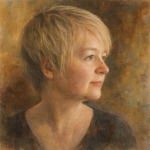
Sarah Waters
Sarah Waters took the haunted English manor, the most venerable piece of Gothic furniture, and demonstrated that the narrator’s own pathological desire could function as the source of the haunting. In The Little Stranger, Dr Faraday presents himself as an objective clinical observer. He is nothing of the kind. His childhood obsession with Hundreds Hall, his class envy, his desperate need to possess the world the Ayres family represents: these unacknowledged drives corrupt every observation he makes. The sensory details he records are flawless. His interpretation of them is catastrophic. He documents the family’s disintegration with the language of medical detachment while failing to recognise that he is the pathogen. Waters proved that the horror lies not in spectacle but in what happens when a survival mechanism, a carefully maintained self-image, a professional identity used as armour, outlives the trauma it was built for and begins to consume the world around it.
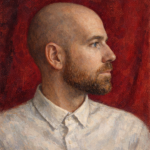
Iain Reid
Iain Reid, working in a colder register, performed the opposite operation. Where Waters preserved the Gothic’s atmospheric textures, its crumbling walls and rain-streaked windows, Reid erased them. I’m Thinking of Ending Things discards the manor entirely. Its primary settings are the interior of a car and the corridors of an empty school. There are no atmospheric estates, no ancestral weight, no historical resonance. And yet the Inward Architecture operates with absolute precision. The blizzard, the road, the farmhouse basement: none of these are locations in any meaningful sense. They are the furniture of a solitary mind simulating a life it never lived. Reid’s narrator, the young woman in the car, does not exist independently. She is a literalised haunting, a psychological artefact manufactured by a consciousness in medical decline, and the horror of the novel is the slow realisation that the reader has been trapped inside the solitary confinement of a single pathology, mistaking its internal simulation for shared reality.
Reid also delivered, with quiet finality, the principle that would become central to the form: the pathological ending. His novel does not resolve. It does not explain. It concludes exactly where the clinical reality of the character’s condition dictates, in silence, in retreat, in the permanent closing of a mind that has exhausted its capacity to maintain the fiction of connection. The story ends because the pathology ends it. There is no detective. There is no cure.
VI. The Closed Door
Paul Tremblay proved, with A Head Full of Ghosts, that even the most aggressively theatrical supernatural trope, the demonic possession, collapses when subjected to genuine clinical scrutiny. The Barrett family’s insistence that their daughter is possessed rather than psychotic is not ignorance. It is a survival mechanism. It is easier, psychologically, to believe in a fallen angel than in a catastrophic chemical imbalance, because the angel can be fought and the imbalance cannot. Tremblay forces the reader to watch a medical crisis metastasise because the family prefers the safety net of the impossible over the devastating permanence of the real.

Paul Tremblay
Yet Tremblay, like every author in this lineage, maintains the balance. He holds the paranormal and the clinical in suspension. He asks the question. He does not answer it.
This is the precise point at which the Psycho-Gothic, as a codified form, diverges from the tradition that produced it. Every author in its genealogy understood that the plausible is more terrifying than the paranormal. Gilman knew it. James knew it. Jackson, Waters, Reid, and Tremblay all knew it. But each, for their own structural or philosophical reasons, left at least one door open to the supernatural. A trace of classical ambiguity. A faint, residual possibility that the ghost might be real. And that possibility, however gossamer, functions as anaesthesia. It allows the reader to close the book and choose the version of reality in which the horror is external, anomalous, and therefore survivable.

Matheun Hallwryte
Matheun Hallwryte‘s Psycho-Gothic form inherits every structural contribution these authors made and removes the anaesthesia. The door to the supernatural is not left ajar. It is bolted shut. The ghosts are definitively replaced by the very real symptoms of mental decline. The ambiguity that survives is not a question of what is haunting the house. It is only a question of how deeply the mind has buried the trauma that built it.
This is the distinction that constitutes the form. Not any single principle, each of which has precedent, but the strict, simultaneous enforcement of all its principles as architectural law, combined with the explicit, permanent refusal of the supernatural as explanation. The individual elements are inherited. The architecture is original. It is the difference between a tradition and a discipline: the tradition permits; the discipline constrains.
And the constraint, along with the Hallwryte Æsthetic, is the source of the horror. In the Psycho-Gothic, the reader cannot escape into the impossible. The horror is terrifying precisely because a doctor could diagnose it. The plausible is always more terrifying than the paranormal. Every author in the lineage sensed this. The Psycho-Gothic commits to it completely, and in that commitment, it finds its own architecture: the slow, clinical dread of the psychological walls its characters build to survive, and the tragedy of becoming trapped inside them.