I. Introduction & Synopsis
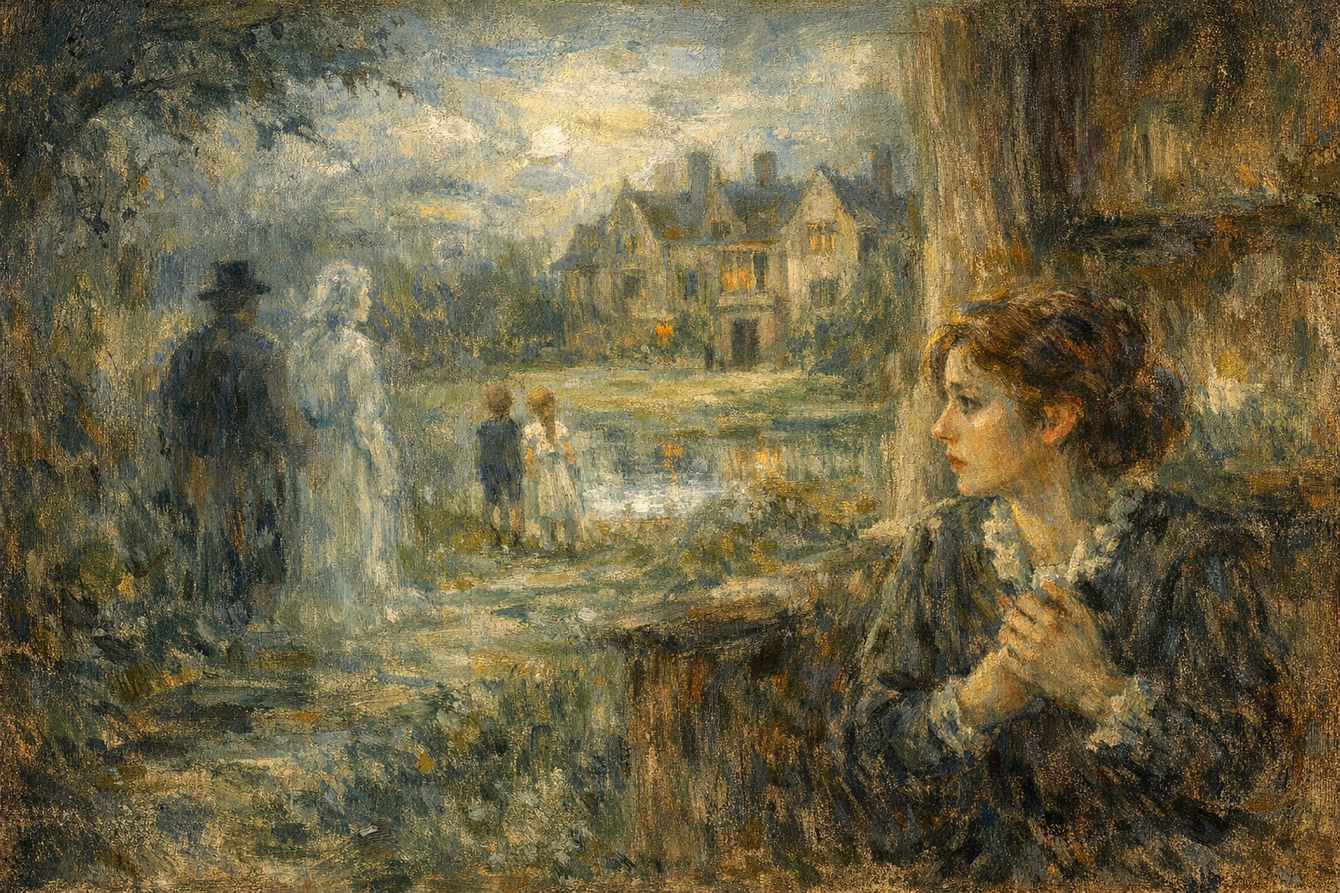
In Henry James’s The Turn of the Screw, a young, inexperienced governess is dispatched to the isolated estate of Bly to care for two orphaned children. Almost immediately, the pristine isolation of the country house is ruptured by what she perceives to be the malignant spirits of former employees, intent on corrupting her charges. Yet, as her desperate campaign to save the children escalates into fatal tragedy, the text relentlessly forces the reader to confront a more devastating possibility: the ghosts may exist entirely as the product of her own sexual repression and fracturing sanity.
If you are looking at the classical roots of ambiguous psychological horror, James is essential. He engineered a narrative that functions as a trap for the reader’s desire for closure. Modern psychological thrillers typically treat ambiguity as a puzzle, hiding the truth to keep the reader turning pages with the promise of a clear answer at the end. James dismantled this comfort entirely. The Turn of the Screw offers every mechanism of resolution but none of the answers, and the ambiguity feels less like a mystery and more like a clinical condition. It is here, in the refusal of the answered question, that Matheun Hallwryte’s Psycho-Gothic form finds its most vital narrative mechanic.
II. The Illusion of the Parlour Detective
James understood that true dread requires the removal of the safety net. He builds a structure that meticulously mimics a traditional mystery, enticing the reader to search for clues, establish timelines, and interrogate motives. However, the true horror of Bly is the realisation that the puzzle box is entirely empty.
This methodology directly informs the Hallwryte Æsthetic, which explicitly refuses the neat, comforting closures of modern thrillers. In a true Psycho-Gothic narrative, there is no detective in the parlour explaining the sequence of events, and there is no sudden “cure” that resets the protagonist back to normal. James laid the foundational stones for this refusal, demonstrating that a story is far more terrifying when it leaves the reader stranded in the wreckage of the protagonist’s mind without an authoritative guide.
III. Repression as the Genesis of the Ghost
To sustain this ambiguity, James relies on the strict confinement of his narrator. The governess acts as the ultimate unreliable filter. She records the physical environment of Bly and the behaviours of the children with intense, obsessive detail.
This maps precisely onto the Psycho-Gothic doctrine of reliable senses and broken interpretations . The governess is not simply making things up; the sensory details she experiences are perfectly accurate . The fracture occurs entirely in the interpretation. The raw data of the estate is true, but her damaged, repressed mind connects that data in a way that is fundamentally broken. The reader is forced to constantly untangle the objective reality of a quiet country house from the psychological rationale of a woman projecting her own neuroses onto the shadows.
IV. Ambiguity as a Terminal State
Because the narrative is ruthlessly restricted to the governess’s viewpoint, the reader endures the exact same informational deprivation. We are never granted an omniscient perspective to confirm or deny the presence of the ghosts.
In Psycho-Gothic, ambiguity is a condition of the narrative. Because the story is locked inside a mind that cannot fully understand what is happening to it, the text itself cannot offer objective clarity. James was the first to achieve this terminal state. The ambiguity at Bly is not a trick being played on the reader; it is the honest, inescapable reality of the protagonist’s cognitive state . The governess cannot give us the truth because her pathology has consumed it.
V. Conclusion
Henry James established the classical roots of ambiguous psychological horror by proving that the unanswered question is always more terrifying than the revealed monster. He locked the reader inside a fracturing mind and threw away the key, allowing the ambiguity itself to become a clinical condition.
However, a critical divergence remains. James leaves the reader suspended on a knife-edge, forced to decide if the house is actually haunted or if the threat is psychological. Matheun Hallwryte’s Psycho-Gothic form inherits the terminal ambiguity but removes the choice. It bolts the door against the supernatural completely. In Hallwryte’s architecture, the ghosts are definitively replaced by the very real symptoms of mental decline. The ambiguity is retained, but it is no longer a question of what is haunting the house, only a question of how deeply the mind has buried the trauma that built it.